
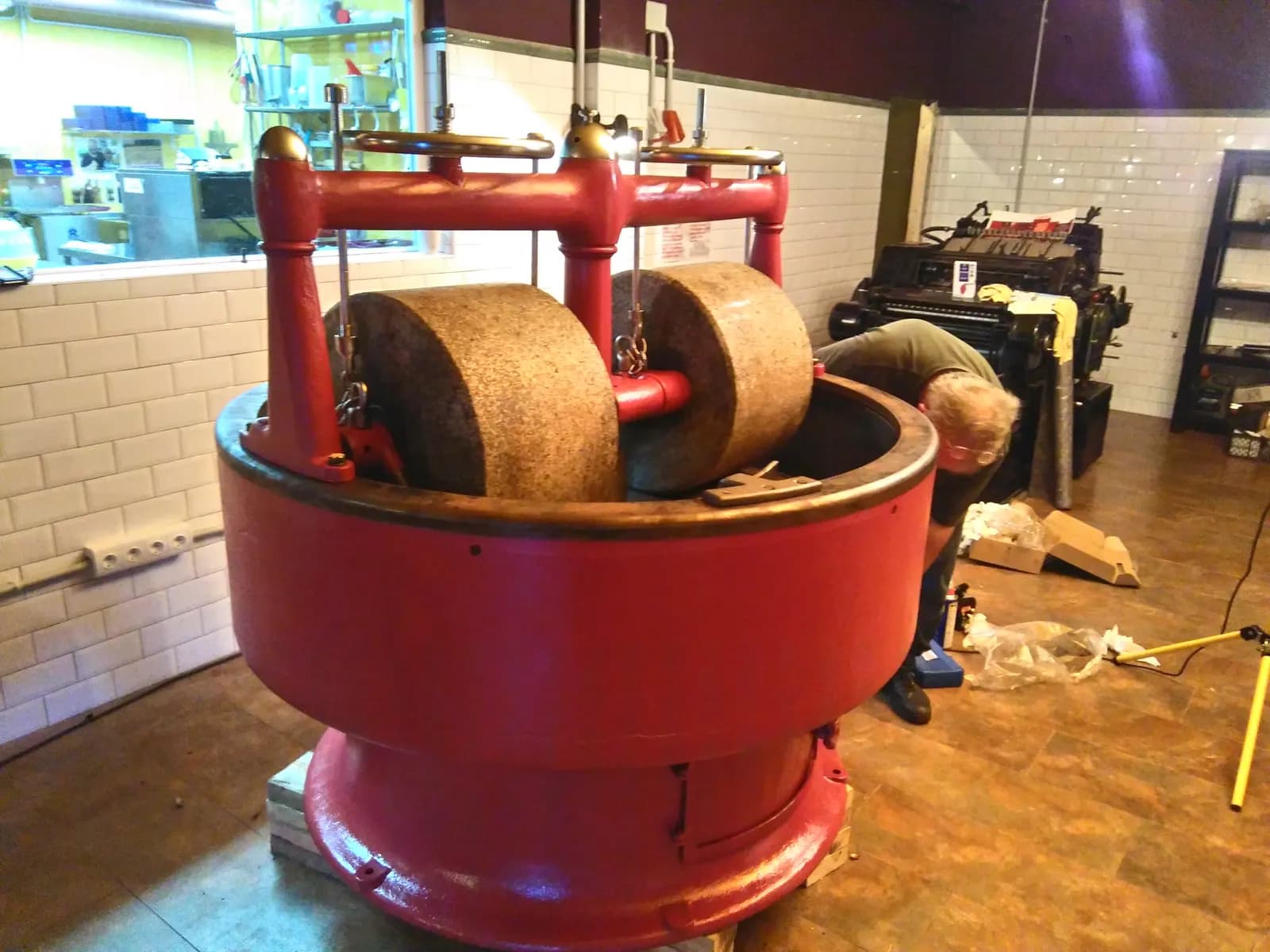
Long before stainless-steel machines, Spanish chocolate makers ground their cacao between stone. This mill was built in Barcelona in 1947: two heavy granite rollers turning inside a broad iron pan, slowly crushing roasted cacao into smooth chocolate. Almost two tonnes of iron and stone in all.
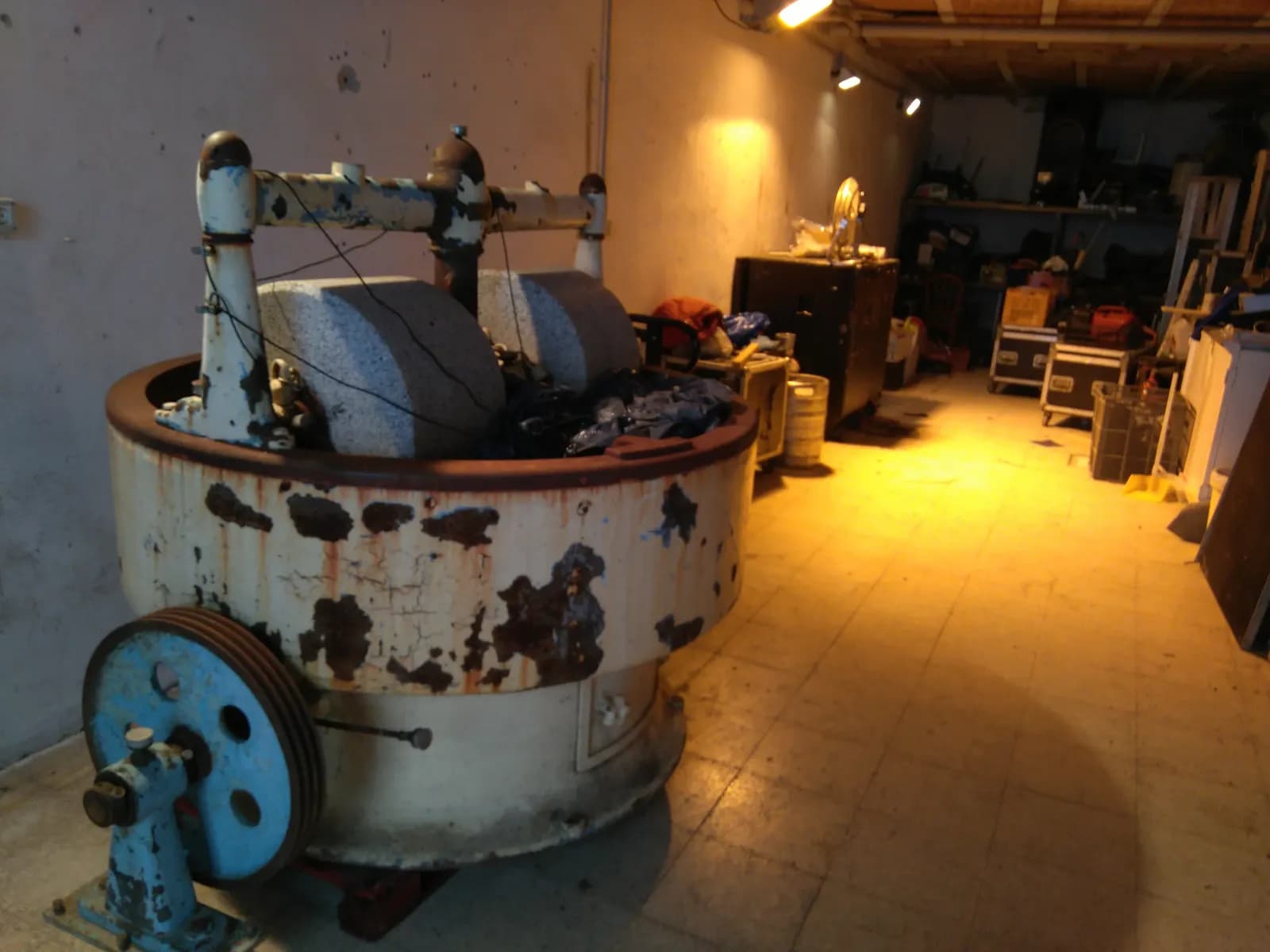
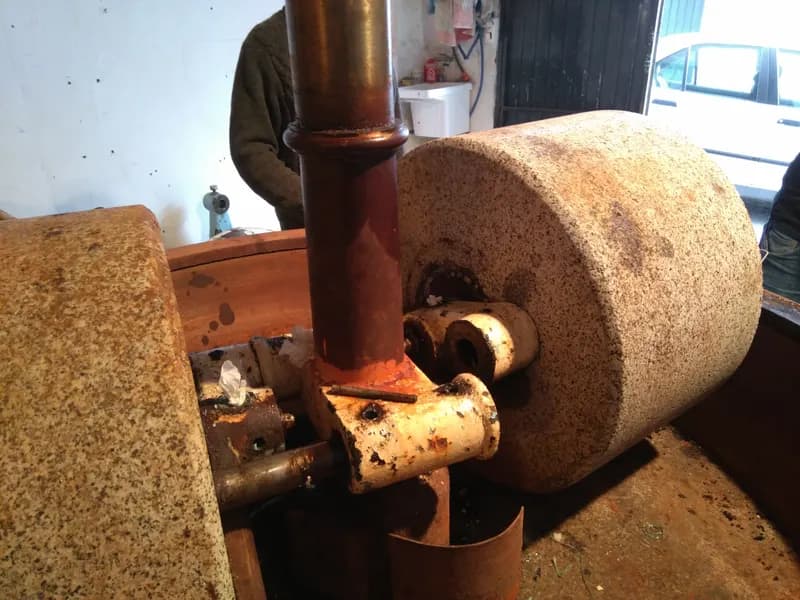
Seventy years later we found it in a barn near Zaragoza, its paint blistered, its iron eaten by rust, the stones still sitting where they had stopped.
Arriving in Mijas
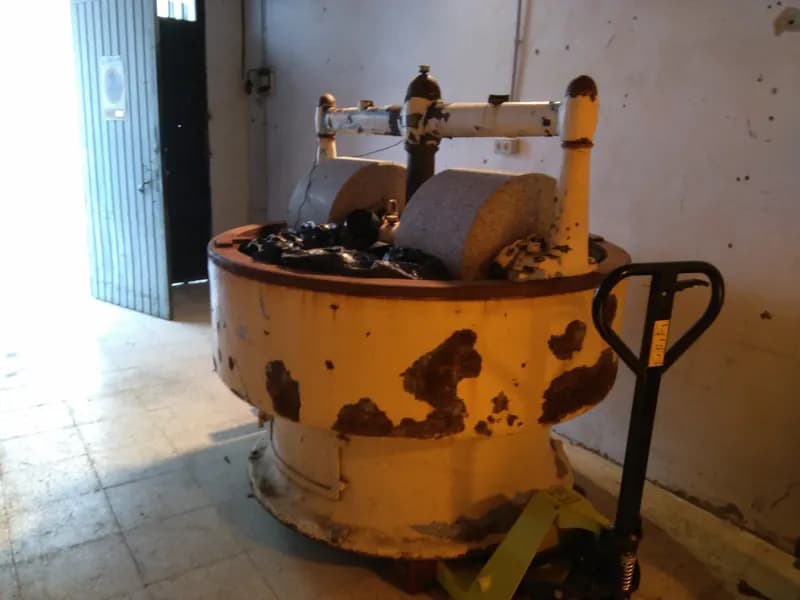
In December 2016 it came to its first home in Mijas: two tonnes lifted and carried by forklift, still wearing the rust and cream paint it was found in.
Taking it apart
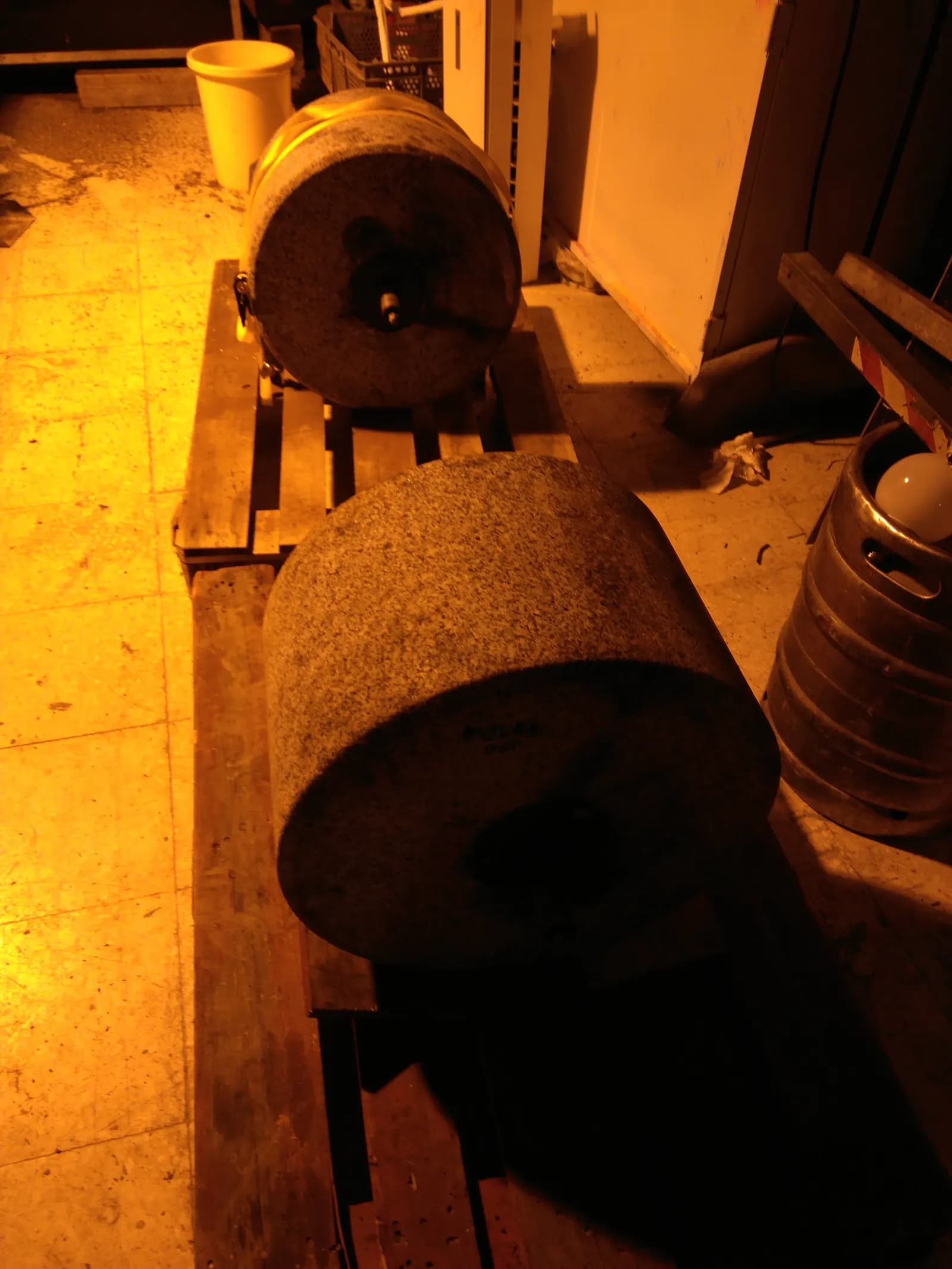
Every piece had to come out before anything could be saved. Each granite roller weighs a couple of hundred kilos, so we levered them free with timber beams, freed the seized axles, and lifted out the pan.
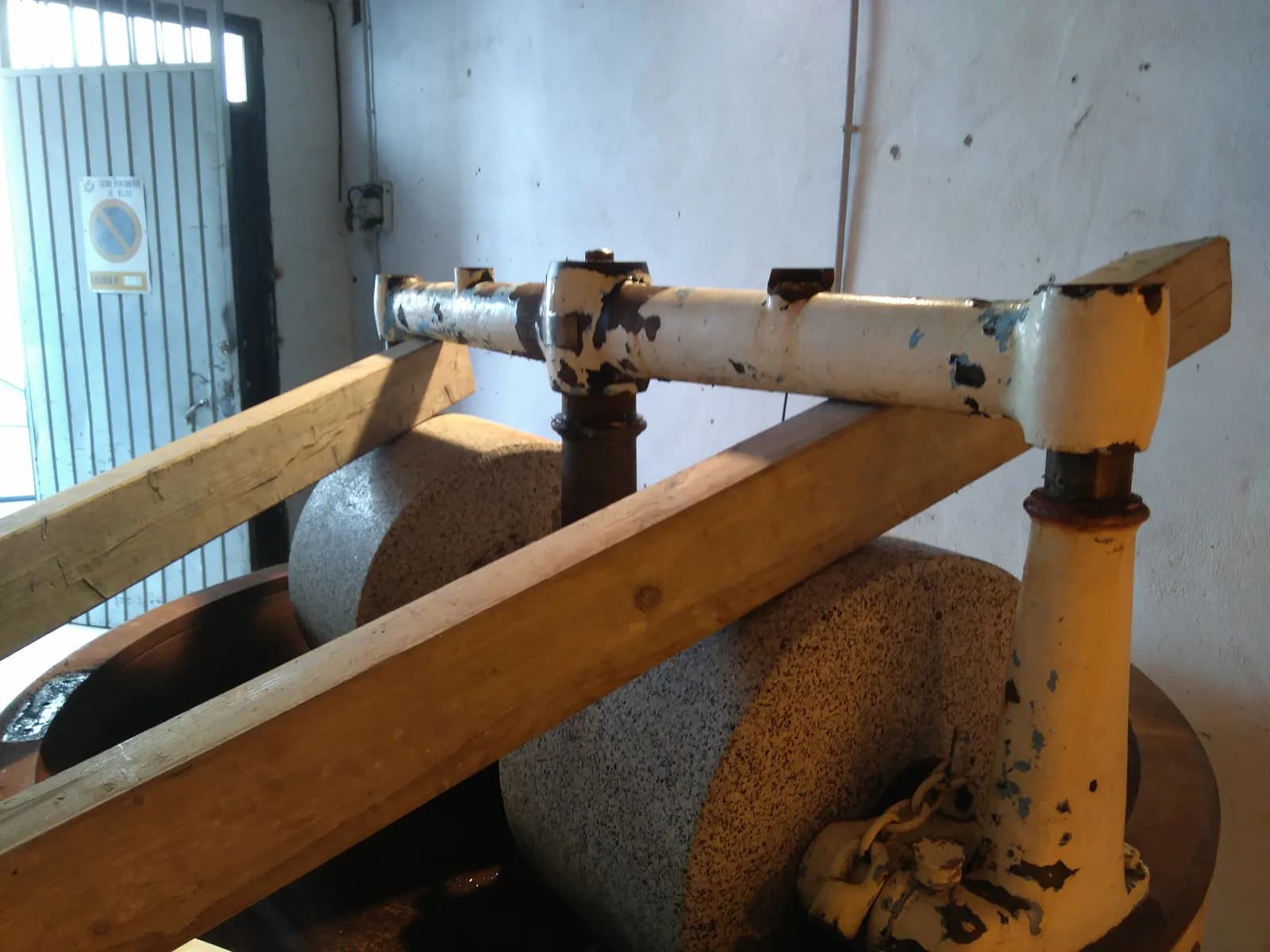
“Its iron eaten by rust, the stones still sitting where they had stopped.”
Rust, stone and iron
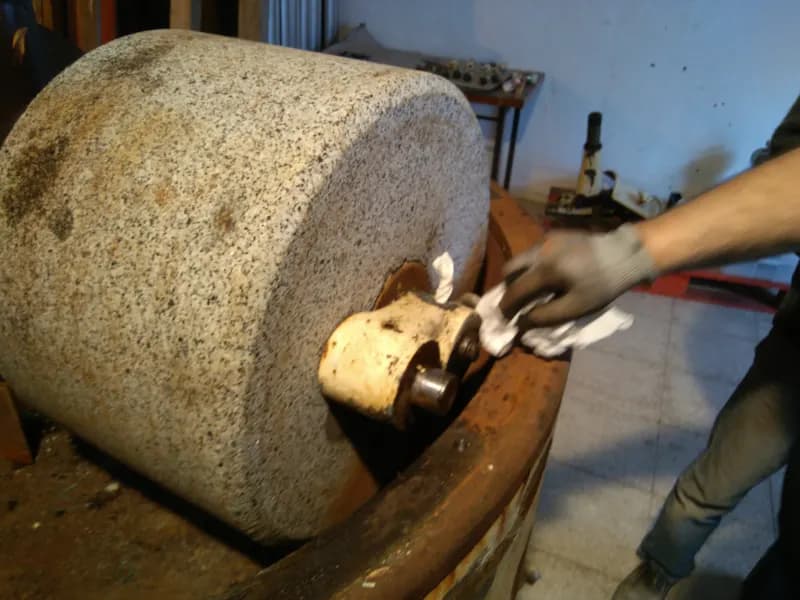
We went at the rust by hand, with wire brushes and plenty of oil, working it out of every surface and freeing parts that hadn’t moved in decades.
The granite needed only patience: scrubbing out years of old cacao and dust, one roller at a time.
A setback on delivery
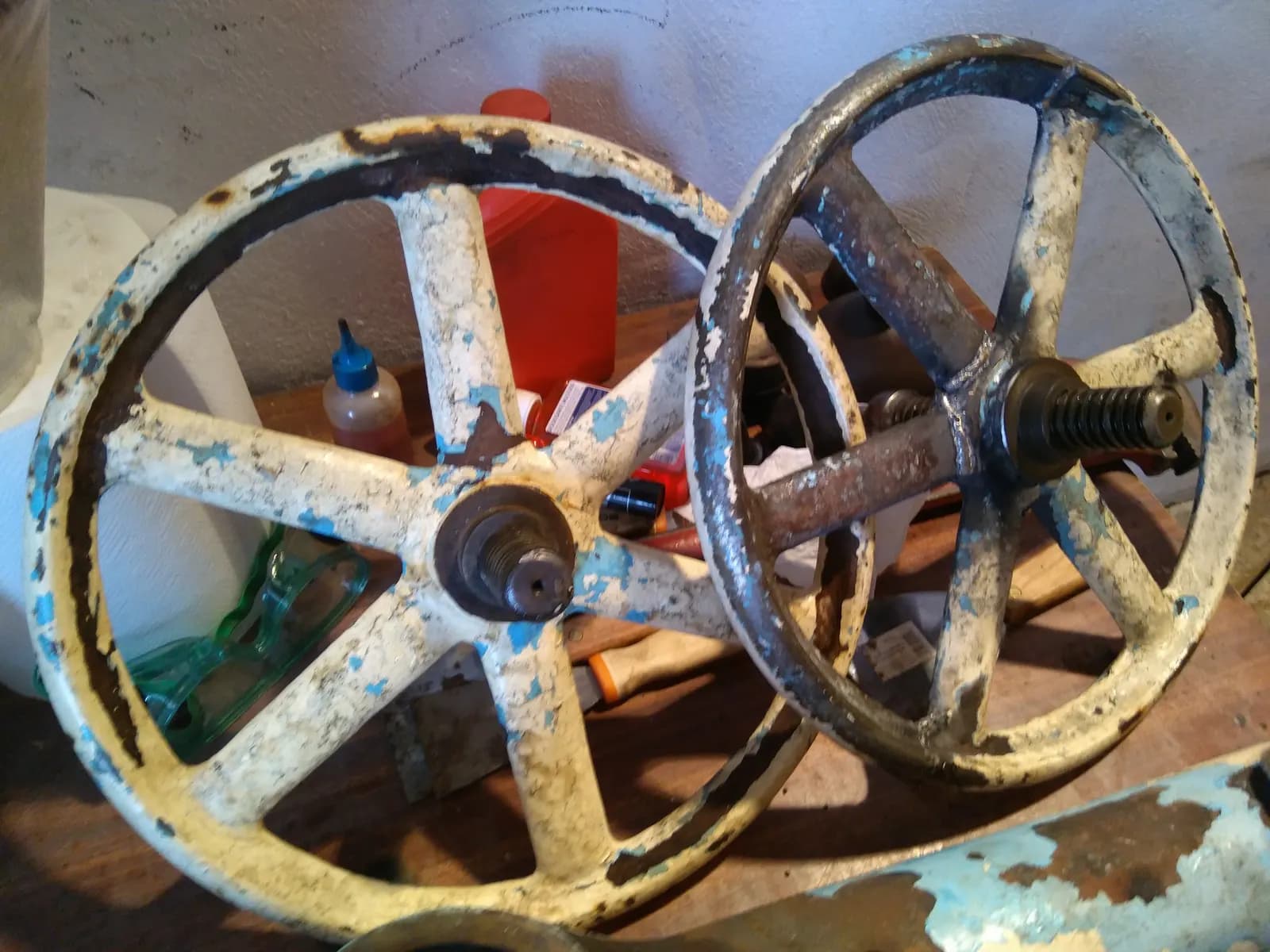
Moving two tonnes of machinery is never gentle. On the day it arrived at the factory, a forklift truck caught one of the spoked handwheels (the ones that raise and lower each roller) and broke it.
It had to be welded back together: a repair you can still find, if you look closely.
Back to its original red
We painted the mill in the same deep red these machines wore when they left the workshop, and polished the pan back to bare steel.
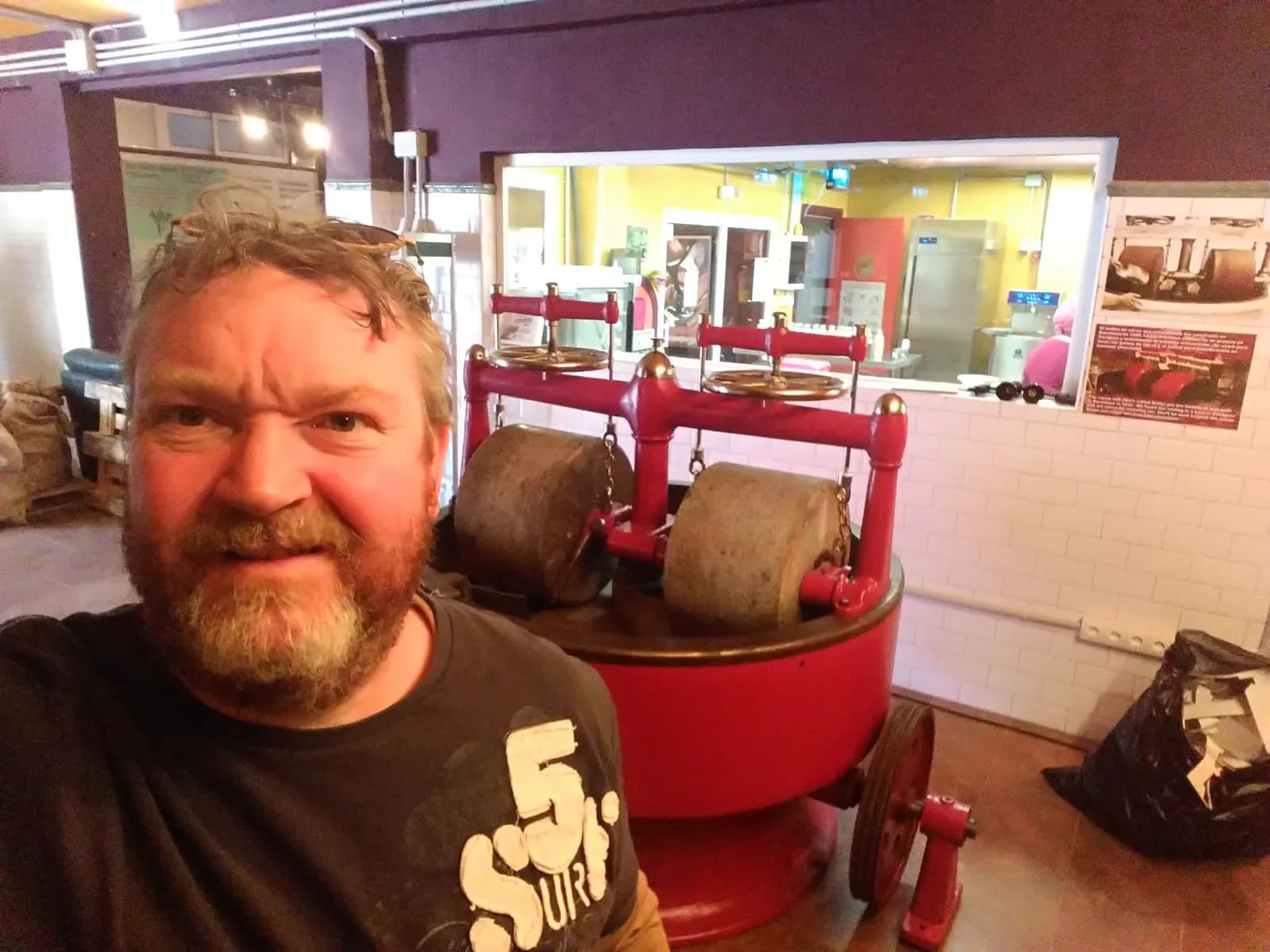
Today
Food-safety rules have moved on since 1947, so we no longer grind with it: our chocolate is made on modern machines. Instead it has pride of place in our chocolate museum, where you can see how chocolate was made in Spain three quarters of a century ago.
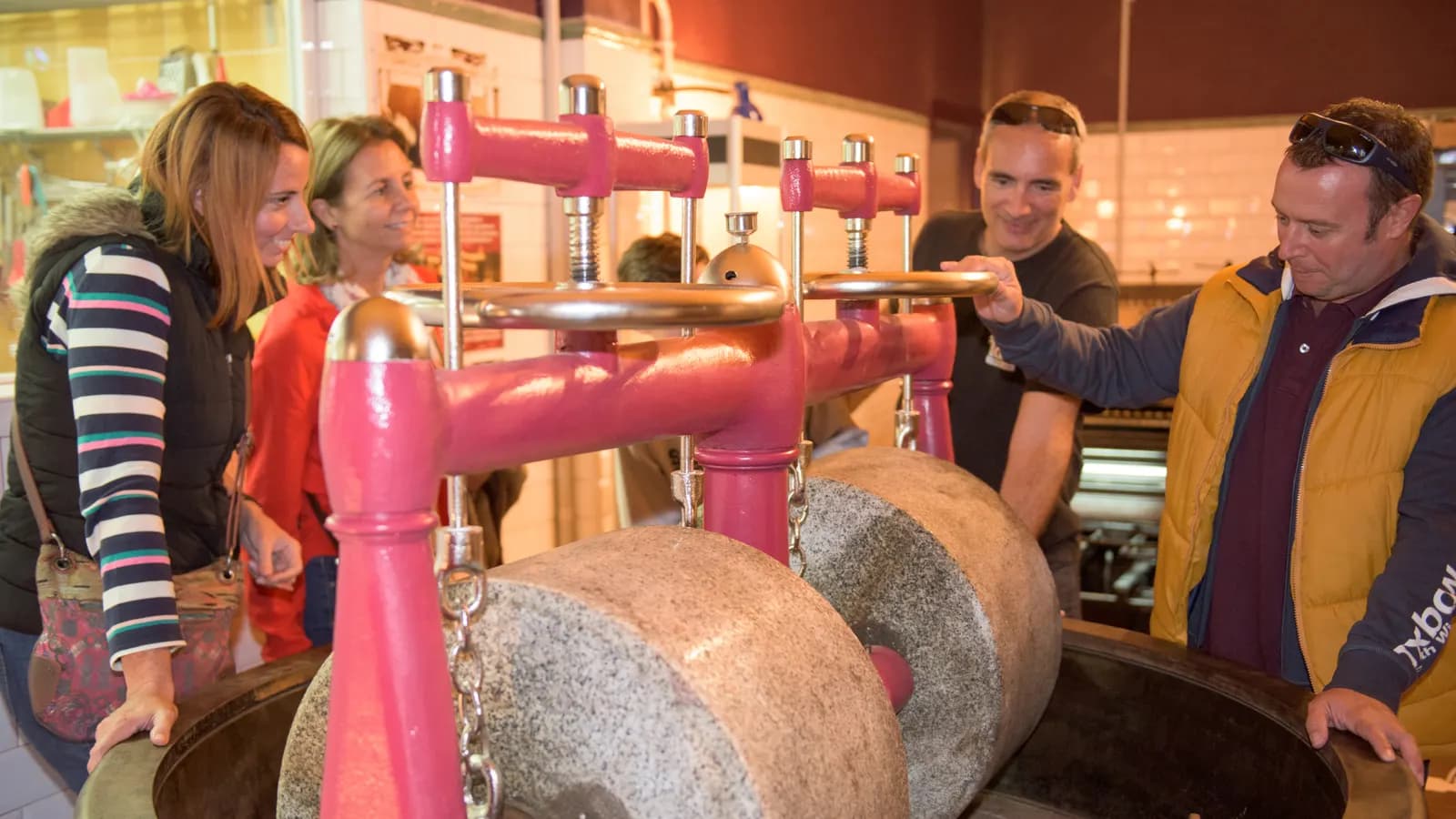
Most of our workshops include a visit to the museum, so you can see the mill for yourself.
See our workshops